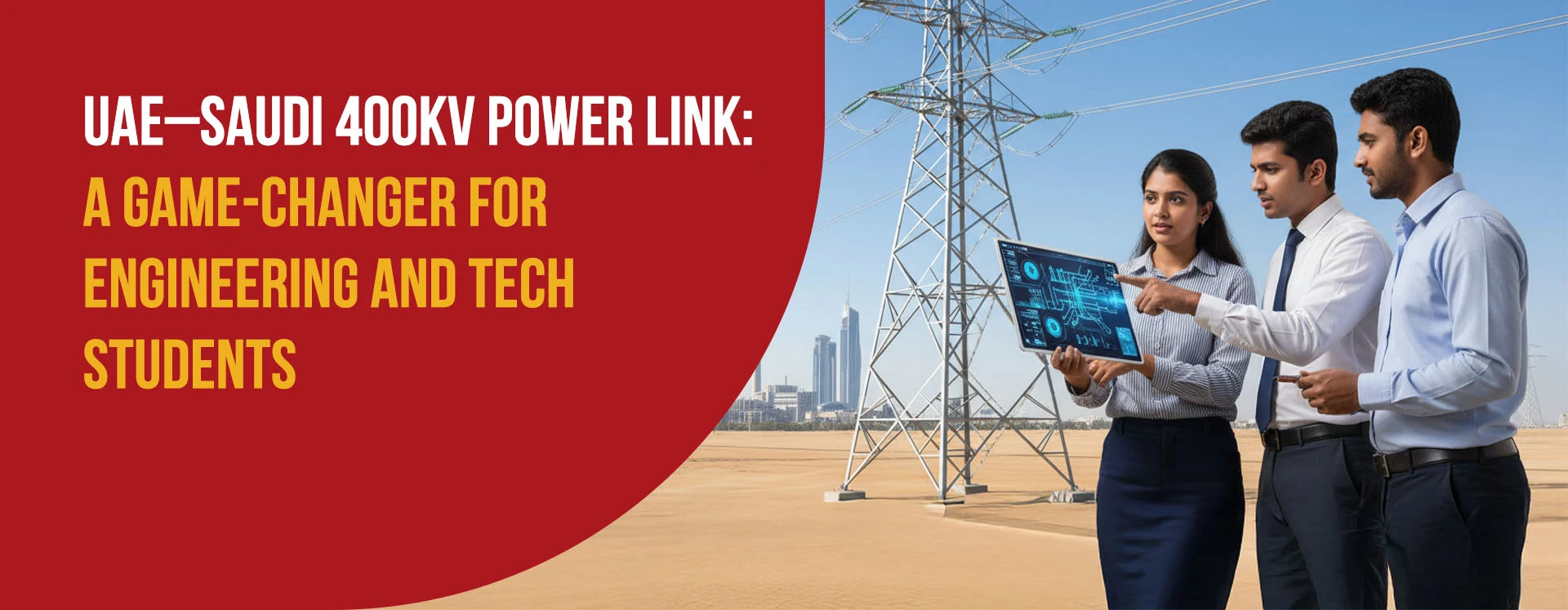
UAE-Saudi 400kV Power Link: A Game-Changer for Engineering and Tech Students in the UAE
Introduction
Have you ever wondered how one energy project can reshape an entire region's future jobs? In the UAE, a USD 205 million upgrade to the UAE-Saudi 400kV power link is doing exactly that. It aims to add 1,100 MW of extra transmission capacity, taking the UAE link from 2,400 MW to 3,500 MW.
If you are an Indian student planning an engineering or tech degree, this is not just news. This is a real signal. The UAE energy sector is expanding, and it will need talent that understands grids, data, and modern infrastructure.
What is the UAE-Saudi 400kV power link upgrade?
The UAE and Saudi Arabia are strengthening a major electricity link through the GCC grid. The project is led by the GCC Interconnection Authority (GCCIA) and financed through a US$205 million agreement backed by the Abu Dhabi Fund for Development.
Here is what the upgrade includes:
- A 96-kilometre double-circuit overhead transmission line at 400kV
- A connection between Al Silaa (UAE) and Salwa (Saudi Arabia) substations
- Substation upgrades at Al Silaa, Salwa, and Gonan, including modern protection and control systems
- A planned timeline that targets completion by Q1 2027
This is the kind of project that turns "classroom concepts" into real industry work.
Why this matter to Indian students choosing engineering in the UAE
Many Indian students ask a practical question first. "Will this degree lead to real career opportunities?" In engineering, the answer depends on the ecosystem around your university.
This power link is part of a wider Gulf plan to modernise energy infrastructure and enable cross-border power trading.
That creates demand for engineers who can build, protect, automate, and optimise complex systems.
If your goal is engineering careers with strong future demand, the UAE is actively creating those pathways.
How the UAE energy sector creates new engineering and tech roles
Large transmission upgrades are not only about cables and towers. Modern grids use sensors, automation, and analytics to prevent failures and manage peak load. This expands the career map beyond core electrical engineering.
You can expect increasing demand in roles like:
- Power systems engineer (grid planning and stability)
- Protection and control engineer (relay logic and fault response)
- Substation automation engineer (SCADA and intelligent switchgear)
- Smart grid and data specialist (load forecasting and optimisation)
- Cybersecurity in critical infrastructure (OT security fundamentals)
These are strong "engineering plus tech" careers. They reward students who mix core engineering with practical digital skills.
What you can learn from this project as a student
If you are studying engineering in the UAE, this project matches key academic modules you will study, such as:
- High-voltage engineering
- Power transmission and distribution
- Power electronics and system protection
- Control systems and automation
- Energy economics and reliability planning
Now imagine learning these topics while the region is building the exact systems you study. That makes coursework feel connected to your future.
Why projects like this can lower costs and improve reliability
The reference article highlights three major outcomes:
- More reliable electricity supply, especially during peak demand
- Cheaper cross-border power trading, because power can flow from the lowest-cost source
- Reduced need for expensive backup reserves, because interconnected grids can support each other
For students and families, reliability matters. So does cost predictability. A stable infrastructure environment supports better student life, campus operations, and long-term economic confidence.
What this means for your career planning, starting today
If you are in Class 12 or early in undergraduate planning, use this news as a planning advantage. Focus on building a profile that matches where the UAE is investing.
A practical student roadmap:
- Choose a degree track: electrical, electronics, energy, mechatronics, or computer engineering
- Add skill layers: Python basics, data handling, control systems, or industrial networking
- Target internships in utilities, EPC firms, or energy-tech vendors
- Build projects: relay coordination simulations, load prediction models, or SCADA concept demos
You do not need to be perfect. You need to be aligned.
How Study From UAE helps you turn this opportunity into a real plan
Choosing the right university and programme matters as much as choosing the right country. Study From UAE (SFU) supports Indian students with a guided path, from university discovery to applications and visa preparation.
With SFU, you can:
- Shortlist UAE universities by budget, city, and programme fit
- Explore scholarships and plan costs with practical tools
- Get step-by-step application and visa guidance
- Align your course choice with career outcomes in priority sectors
For Indian parents, this matters because it reduces uncertainty. It also improves decision quality.
Conclusion: Key takeaway for Indian students and parents
The UAE-Saudi 400kV power link upgrade is a clear sign of where the region is going. The Gulf is building larger, smarter, more connected energy systems.
That means greater demand for skilled graduates in the UAE energy sector, stronger engineering careers, and better real-world exposure for engineering students in the UAE.
Imagine yourself working on a substation automation team in the UAE. Imagine your internship site being part of a cross-border grid upgrade. This is how global careers begin.
Ready to turn your UAE dream into reality? Start your journey with Study From UAE today.
 Previous Blog




 Log in with Google